If you’re searching for the best things to see in Lisbon, you’ll quickly realise there’s far more to Portugal’s capital than just yellow trams and pastel-coloured buildings. Lisbon is one of Europe’s most charming cities — a place where historic neighbourhoods meet rooftop bars, tiled alleyways lead to hidden cafés, and every hill seems to reward you with another incredible viewpoint.
What makes Lisbon especially appealing is the pace of the city. Compared to other European capitals, Lisbon feels slower, more relaxed, and surprisingly affordable. You can spend your mornings wandering through centuries-old streets, afternoons eating fresh seafood by the waterfront, and evenings listening to traditional Fado music while the city glows golden at sunset.
Whether you’re visiting for a weekend, planning a Portugal itinerary, or only have one day in the city, this guide covers the 10 best things to see in Lisbon, along with practical travel tips, transport advice, budgeting ideas, and the best time of year to visit.
Disclaimer: This post may contain affiliate links, which means I get a small commission if you make a purchase (at no extra cost to you). It’s one of the ways I can keep producing free resources and guides for my readers. Thank you for your support! Refer to the Disclosure Policy for more details.
Tips for Visiting Lisbon, Portugal
Before you dive into all the best things to do in Lisbon, it’s helpful to get a few key tips and essentials that will make exploring the city smoother, easier, and more enjoyable.
Short on time? Here’s a quick guide with key Portugal travel tips to help you save time, money, and stress on your next trip.
Short on time?
Here are my top recommendations for your next Portugal trip:
💸 Save money: Use a Wise travel card to spend in multiple currencies with real exchange rates and low conversion fees.
🙇🏻♀️ Stay organised: Plan every part of your trip, from itinerary to packing list, with my Ultimate Notion Travel Planner Template. It’s the exact system I use to streamline my travel prep, and it’s perfect for visual planners who want everything in one place.
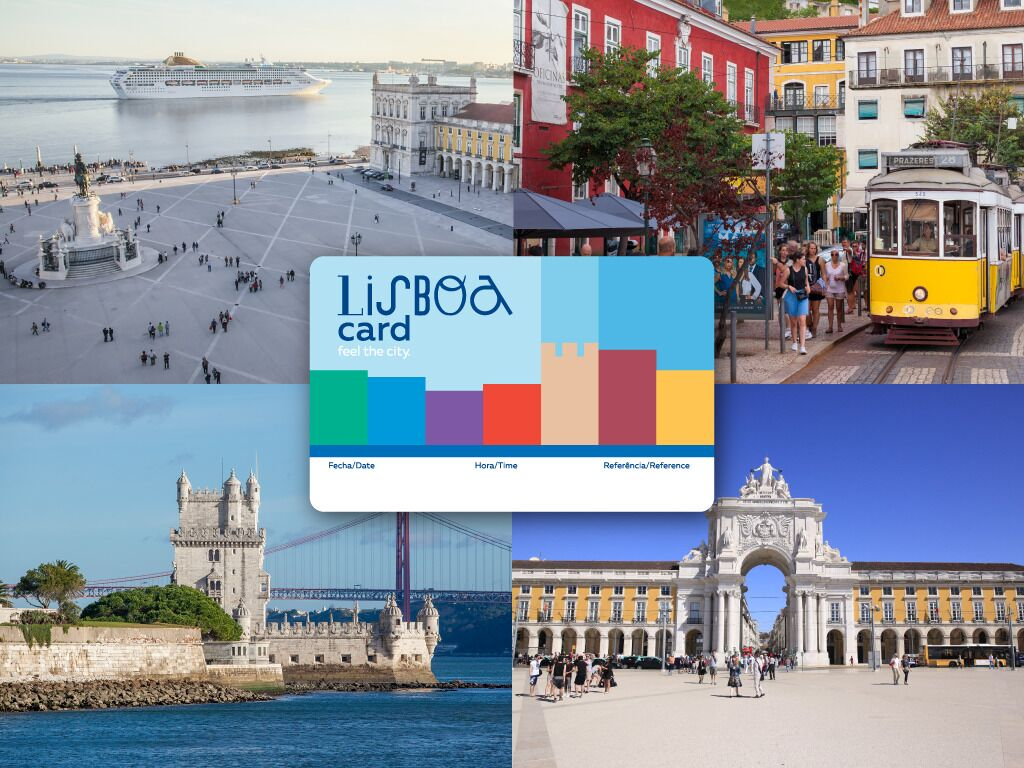
🛤️ Getting Around Portugal: Order a Lisboa card to get unlimited public transport across Lisbon’s public transport network.
🗺️ Tours: Pre-book tours, skip-the-line passes and cultural experiences using Klook, GetYourGuide, and Viator.
🛌 Accommodation: Find the best deals and filter by reviews on Booking.com.
🏥 Travel Insurance: Never leave home without it. World Nomads offers reliable coverage for medical emergencies, cancellations, and lost items.
📶 Staying Connected: Get instant access to data with Airalo eSIM.
Before exploring the best things to see in Lisbon, there are a few practical tips that will make your trip smoother and far more enjoyable.
Getting Around Lisbon
Despite being compact, Lisbon isn’t the kind of city where you’ll want to rely entirely on walking. The hills can be surprisingly intense, particularly in the warmer months, so public transport quickly becomes part of the experience rather than just a convenience.
Metro
The metro is usually the easiest and fastest way to travel longer distances around the city. It’s clean, affordable, and especially useful when arriving from the airport, with the red line connecting directly into the city centre. For most travellers, the metro ends up being the transport option you’ll use the most.
If you’re planning day trips beyond Lisbon, trains are simple to use and connect the city to places like Sintra and Cascais. Ferries also cross the Tagus River and are one of the best ways to reach Cristo Rei while enjoying some of the best waterfront views in the city.
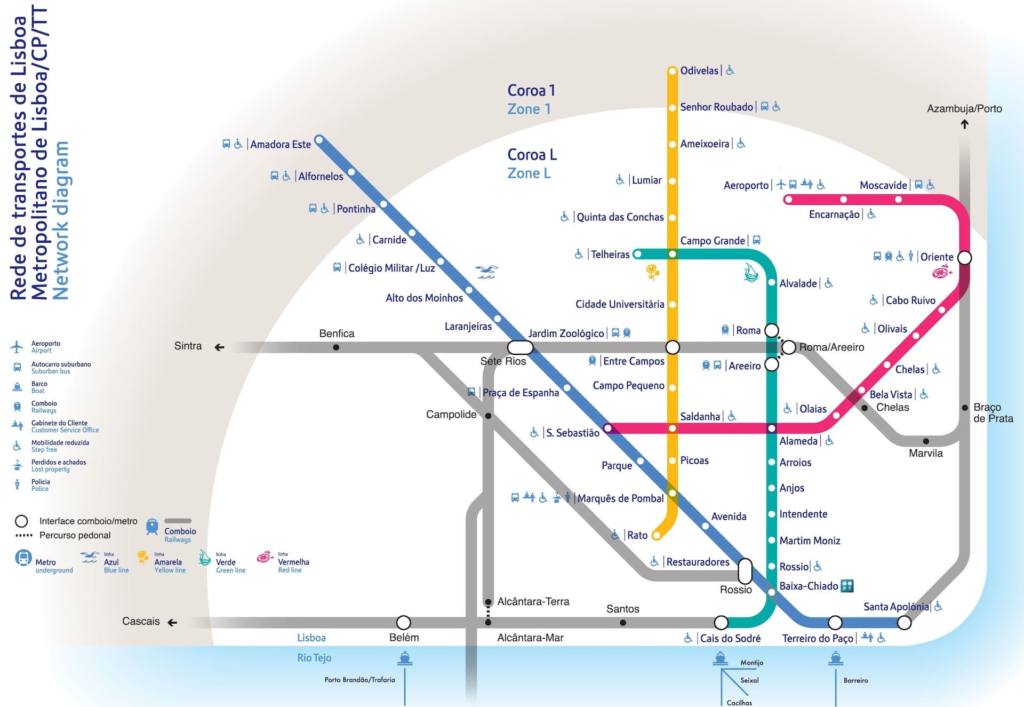
Buses
Buses help fill the gaps where metro lines don’t reach and are often less crowded than the trams. They’re particularly useful for visiting Belém or avoiding some of Lisbon’s steeper uphill walks. If you’re heading to São Jorge Castle, Bus 737 is one of the easiest ways to skip the climb.
Trams
Of course, Lisbon’s iconic trams are part of the city itself. Tram 28 passes through some of Lisbon’s most beautiful historic neighbourhoods, including Alfama and Graça, and while it’s worth experiencing at least once, it’s often more crowded than people expect. Early mornings are usually the best time to ride it before long queues begin forming.
Elevators & Furniculars
Another unique part of Lisbon’s transport system is its elevators and funiculars, designed to help navigate the city’s steep terrain. The Santa Justa Lift is the most famous, connecting lower streets with higher neighbourhoods while offering panoramic views over the rooftops. The historic funiculars are equally charming and make climbing some of Lisbon’s steepest hills far easier.
The Elevador de Santa Justa is free with the Lisboa card.
Lisbon Transport Passes
Public transport in Lisbon works through a reloadable travel card system, and unless you’re only using transport once or twice, it’s worth getting one. The main option most visitors use is the Navegante card, previously known as the Viva Viagem card. It’s inexpensive to purchase and can be loaded with either individual journeys, pay-as-you-go credit known as zapping, or an unlimited 24-hour transport pass. You can get a navegante card at the train, ferry or metro station kiosks or ticket machines.
For travellers planning a slower trip where you’re mainly wandering neighbourhoods and occasionally taking the metro or tram, zapping credit is usually enough. But if you’re sightseeing heavily in one day and hopping between attractions, the unlimited 24-hour pass quickly becomes a better value.
Tip: The Lisboa card is a great option for tourists since it includes unlimited public transportation, free access and discounted admission fees to popular sightseeing attractions.
Lisboa Card
There’s also the Lisboa Card, which combines unlimited public transport with entry into many of Lisbon’s museums and attractions. If your itinerary includes places like Jerónimos Monastery, museums, and major landmarks, it can end up saving both money and time. For shorter or more relaxed trips, though, the regular transport card is often all you need.
One important thing to know is that each person needs their own transport card, and cards can only hold one fare type at a time. If you load zapping credit, you’ll need to use it before switching to a 24-hour pass.
What’s included in the Lisboa card?
- Enjoy unlimited travel on metro lines, buses, trams and elevators across the city.
- Free entry to 52 of Lisbon’s major museums, monuments, and landmarks.
- Savings & special offers – Receive discounts ranging from 10% to 50% on selected experiences, plus 5% to 10% off at participating shops and services.
- Included day trips – Travel for free by train to nearby Sintra, Cascais, and the scenic south bank of the Tagus River.
When to Visit Lisbon in Portugal
Lisbon is one of Europe’s best year-round destinations thanks to its mild climate and long sunny seasons, though the experience changes quite a bit depending on when you visit.
Best time to visit Lisbon
Spring is often considered the best time to visit. The weather is warm without becoming uncomfortably hot, outdoor cafés begin filling up again, and the city feels lively without the heavy summer crowds. April and May are especially beautiful for walking around the city and spending time at viewpoints.
Summer brings longer days, festivals, and busy nightlife, but it also comes with intense heat and larger crowds. Lisbon’s hills can feel particularly exhausting in July and August, especially during the afternoon. If visiting in summer, it helps to structure your days slowly with breaks during the hottest hours.
Autumn is another ideal season, particularly September and October when temperatures remain warm but the city begins to feel calmer again. It’s one of the best times for photography and outdoor dining without the peak season rush.
Winter in Lisbon is quieter and more affordable compared to many European cities. While there can be occasional rain, temperatures remain relatively mild, making it a good option for travellers wanting fewer crowds and lower accommodation prices.
🏨 Staying in Lisbon overnight? Consider these accommodation options:
Guesthouse: Dear Lisbon – Palace Chiado Suites
Mid Range: Lisboa Carmo Hotel (4 stars)
Budget: LX Hostel
Budget Tips for Visiting Lisbon
Compared to cities like Paris or Amsterdam, Lisbon can still be relatively affordable, though prices have risen in recent years as tourism has grown.
💰 Save Money in Lisbon With These Budget Tips 💰
💸 One of the easiest ways to save money is by staying slightly outside the main tourist areas, like Baixa or Chiado. Lisbon’s metro system makes it easy to stay in quieter neighbourhoods without sacrificing convenience.
🍴Food can also be surprisingly affordable if you avoid restaurants directly beside major attractions. Traditional Portuguese restaurants often serve generous lunch specials that include a main meal, drink, and coffee for far less than dinner prices.
🚋 Get around for less: Using public transport instead of taxis also makes a noticeable difference to your budget, especially with the Lisboa Card.
🌳 Many of Lisbon’s best experiences are completely free too. Some of the city’s most memorable moments come from sitting at viewpoints like Miradouro da Senhora do Monte at sunset, wandering through Alfama’s streets, or watching the trams pass by from a café terrace.
10 Best Things to See in Lisbon in One Day
Explore Alfama (Old Town)
Alfama is Lisbon’s oldest neighbourhood and one of its most atmospheric. It still carries the feeling of the city’s past, with narrow winding streets, tiled facades, tucked-away courtyards, and small local restaurants where Fado music often spills out into the night. It’s the kind of place best experienced slowly, without a set plan, just letting yourself get lost in it.
Within Alfama, a few landmarks are worth seeking out. The Lisbon Cathedral (also known as Sé de Lisboa or Santa Maria Maior) is considered the city’s oldest church, dating back to the 12th century after Lisbon was reclaimed from the Moors.
Not far away, the Castelo de São Jorge sits at the highest point in the neighbourhood, offering sweeping views over the rooftops and the Tagus River. If you wander up here, you might also spot the resident peacocks roaming the grounds.
You’ll likely come across the famous Tram 28 as it rattles through the steep streets. It’s part of the city’s public transport system and a classic Lisbon experience, though it can get very crowded, so it’s worth keeping an eye on your belongings if you’re riding or standing nearby. I didn’t end up taking it myself, but seeing it wind through the neighbourhood was still part of the charm.
Do keep in mind that Alfama is built on steep hills with plenty of stairs, which adds to its character but can be tiring if you’re walking a lot. If mobility is a concern, a tuk-tuk tour can be an easier way to take in the area without missing the highlights.
Visit Belém Tower
Sitting right on the edge of the Tagus River, Belém Tower is one of Lisbon’s most photographed landmarks and a symbol of the city’s maritime past. The surrounding Belém area is also worth lingering in, with wide riverside paths, leafy gardens, and some of Lisbon’s most famous spots for pastries just a short walk away.
Built in the early 1500s during the reign of King Manuel I, the tower originally served as a defensive structure to guard the entrance to Lisbon’s harbour at the height of Portugal’s Age of Exploration. Today, it stands as a UNESCO World Heritage Site and a reminder of the country’s global seafaring history, with intricate Manueline-style stonework that reflects that golden era.
Inside, you can climb through several levels of narrow stone rooms and terraces, ending with views over the river and the city beyond. It’s a relatively compact visit, but the setting makes it feel special, especially when you pause at the top looking out across the water.
For visiting, early morning or late afternoon is usually best to avoid long queues and harsh midday heat. Comfortable shoes help with the uneven stairs, and it’s worth bringing water if it’s a warm day. The tower is also a popular stop to combine with nearby attractions like the Jerónimos Monastery, which is just a short walk away.
Tip: Entry to Belém Tower is included with the Lisboa Card, which can make it a good option if you’re planning to visit multiple landmarks around the city.
💸 Maximise your Lisbon itinerary without breaking the bank: 💸
- Belém walking tour + Jerónimos Monastery + Belém Tower – Explore Portugal’s Age of Discovery with a guided walk through Belém. Includes skip-the-line entry to Jerónimos Monastery, a stop for a classic pastel de nata, and finishes by the riverside at Belém Tower.
- Sunset sail on the Tagus River – Set off from central Lisbon on a relaxed sailboat cruise as the city glows at golden hour. A simple way to see Lisbon’s skyline from the water with a drink in hand.
- Lisbon tuk tuk highlights tour – A comfortable way to cover Lisbon’s hills, viewpoints, and historic neighbourhoods. With a local guide, you’ll hit key landmarks and scenic stops without the uphill walking.
Try Pastéis de Nata
No trip to Lisbon feels complete without trying Portugal’s most iconic sweet treat, the pastel de nata. These small custard tarts have a crisp, flaky pastry shell filled with rich, silky egg custard, traditionally baked at a high heat so the top caramelises into a lightly blistered finish. They’re usually served warm, with a sprinkle of cinnamon and icing sugar added just before eating.
The origins of the pastry date back to the monasteries of Lisbon, where egg whites were commonly used for starching clothes, leaving monks with large quantities of leftover egg yolks. To avoid waste, they began creating egg-based desserts, which eventually led to the development of the custard tart. The most famous version today comes from Pastéis de Belém, which still uses a closely guarded recipe said to originate from the nearby Jerónimos Monastery and has been passed down since the 19th century.
While Pastéis de Belém is the most well-known stop, you’ll find excellent versions all over the city:
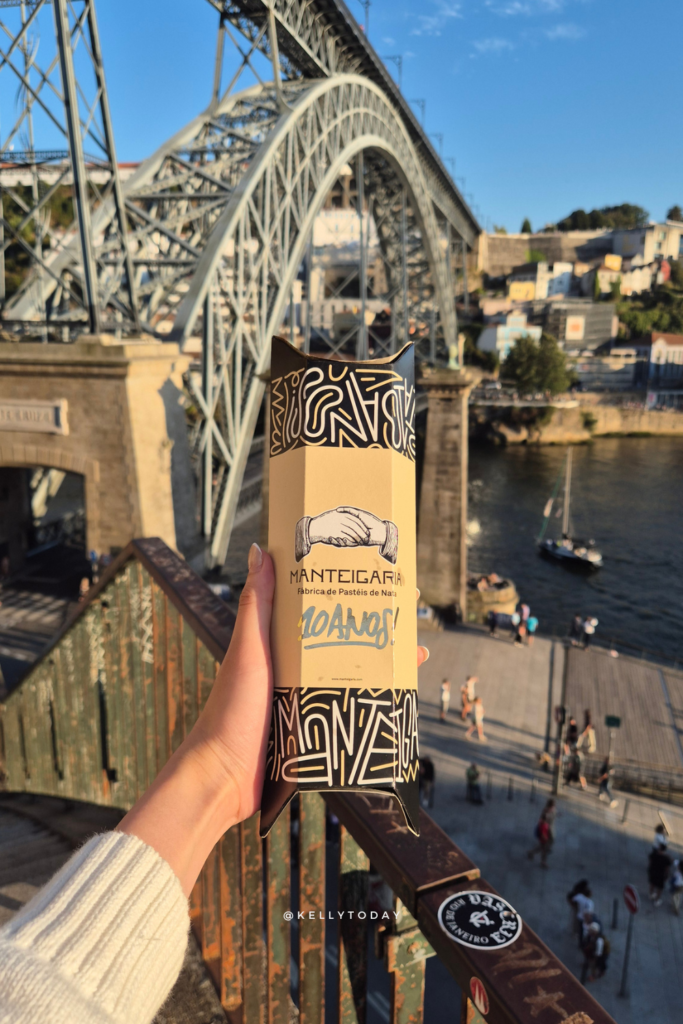
- Manteigaria – A local favourite with several locations across the city. The Rua Augusta shop is especially fun, as you can watch the custard tarts being made fresh throughout the day.
- Castro Atelier de Pastéis de Nata – A small, almost hidden spot that keeps things simple. It’s compact, but the pastries are consistently excellent and worth seeking out.
- Fábrica da Nata – A more modern café-style option with seating, making it a good place to sit down and enjoy a warm pastel de nata with coffee.
- Pastéis de Belém – The most iconic stop of all. This historic bakery is famous for making the original version of the pastel de nata, based on a centuries-old recipe created by monks from the nearby Jerónimos Monastery. Still run by the same family since the 19th century, it’s a classic Lisbon experience and well worth the queue.
✈️ Make sure you pack these 27 must-have travel essentials before heading off on your next trip.

Watch Sunset from a Miradouro
Lisbon is famous for its miradouros—scenic viewpoints scattered across the city that open up over rooftops, river bends, and terracotta hills. Catching the sunset from one is one of the simplest but most memorable things you can do here, with spots like Miradouro da Senhora do Monte and Miradouro de Santa Catarina among the most well-known.
If you haven’t stopped at at least one viewpoint while in Lisbon, it almost feels like you’ve missed a core part of the city. The best part is that most miradouros are completely free and effortlessly woven into the city’s layout, so you’ll naturally come across them as you explore. They’re perfect for a sunset pause or just a quiet break to rest your feet between all the uphill wandering.

Visit São Jorge Castle
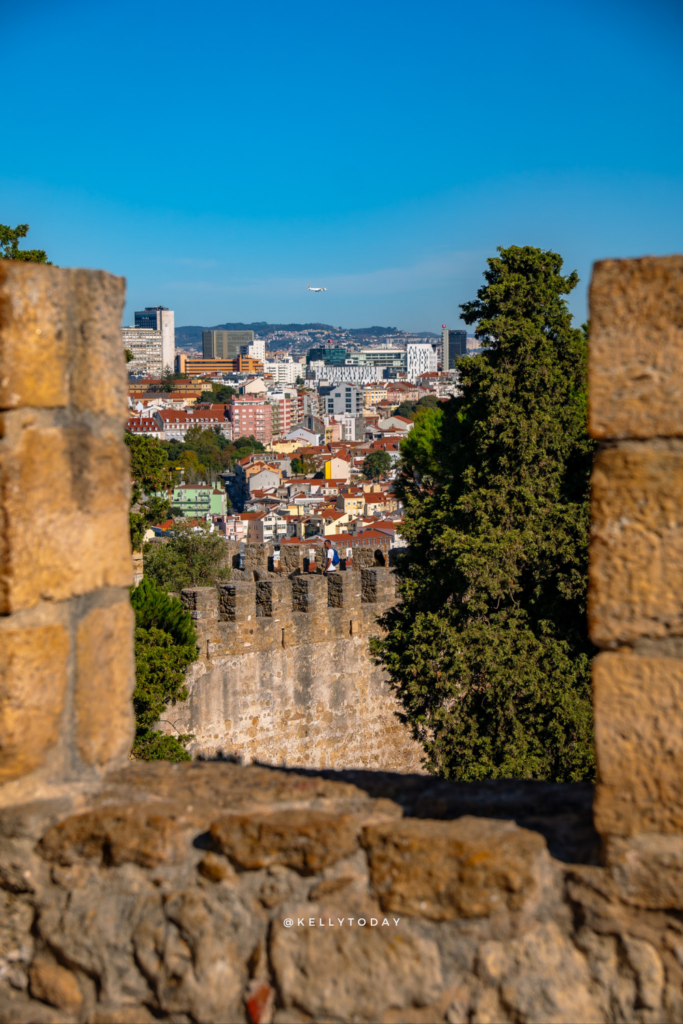
Castelo de São Jorge sits at the top of Lisbon’s highest hill and is one of the city’s most recognisable landmarks. Long before it became a royal residence, the site was used for military defence, with its strategic position shaping much of Lisbon’s early history. After Portugal’s first king, Dom Afonso Henriques, took control in 1147, it later became a key royal stronghold and a place for important gatherings and court life.
Today, it’s less about the history you read and more about the atmosphere you experience. Inside, you’ll find stone ramparts, open courtyards, and quiet pine-shaded corners, all leading you toward uninterrupted views over the city’s rooftops and the Tagus River. It’s also home to peacocks that wander freely through the grounds, which adds a slightly unexpected charm as you explore.
For visiting, it’s worth allowing time just to wander rather than rushing through. The views change as you move around the walls, so there are plenty of spots to pause. It can be reached on foot from Alfama, or more easily by bus or the nearby Tram 28 route, with escalators available from the lower streets if you want to skip the steep climb.
Tickets for Castelo de São Jorge can be purchased ahead of time online or directly at the entrance ticket office. Concession prices are available for youth, seniors, and visitors with specific accessibility needs, but you’ll need to present a valid ID to qualify.
Tip: Entry to São Jorge Castle is included for free with the Lisboa Card, which also covers a range of other attractions and public transport around the city.

Wander Through Baixa and Chiado
Baixa and Chiado sit at the heart of Lisbon and are some of the easiest neighbourhoods to drift through on foot. With wide streets, tiled buildings, bookshops, cafés, and boutique stores, it’s a part of the city that feels both lively and relaxed depending on where you turn. It’s a great area to slow down between sightseeing stops and just explore at your own pace.
Baixa is the city’s lower, more structured district, rebuilt after the 1755 earthquake. Its grid-like streets and grand squares make it one of the most walkable parts of Lisbon, with highlights like Praça do Comércio opening up dramatically to the river, and Rossio Square offering patterned stone paving and a constant buzz of activity.
As you move uphill, the atmosphere gradually shifts into Chiado, a neighbourhood known for its artistic and literary history. Once a gathering place for writers and thinkers, it still carries a creative energy today, with historic theatres, elegant storefronts, and old-world cafés. One of the most iconic stops is Café A Brasileira, where you’ll often find locals and visitors sitting beside the statue of poet Fernando Pessoa, watching the world go by.
Visit LX Factory
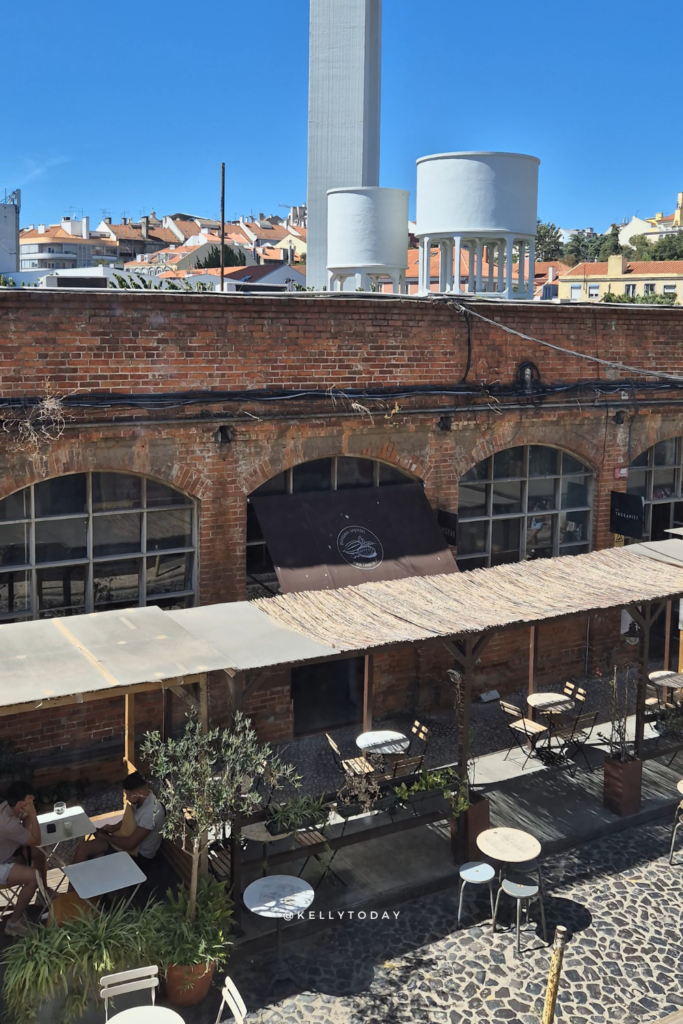
If you’re looking for a different side of Lisbon, LX Factory is where the city shifts into something more industrial, creative, and contemporary. Set under the old railway bridge in Alcântara, this former factory complex has been transformed into a lively hub of studios, cafés, shops, and street art, while still holding onto its raw, warehouse feel.
Once part of the 19th-century Companhia de Fiação e Tecidos Lisbonense textile operation, the site was abandoned for decades before being revived as one of Lisbon’s key creative districts. Today, it brings together designers, artists, small businesses, and food spots in a space that feels constantly evolving.
Things to do at LX Factory:
- Browse independent boutiques and concept stores
- Explore bold street art and murals across the complex
- Visit the iconic bookstore Livraria Ler Devagar, known for its multi-level shelves and dramatic suspended bicycle installation
- Stop for coffee, brunch, or drinks at one of the many cafés and restaurants
- Check out the Sunday LX market, where local producers sell everything from baked goods and cheeses to preserves and regional wines
Part of the appeal of LX Factory is simply wandering without a plan—each alley and staircase reveals something different, from pop-up galleries to hidden rooftop views. It’s also a popular spot to work remotely or unwind by the river after exploring the city’s more historic neighbourhoods.

Jeronimos Monastery
Jerónimos Monastery is one of Lisbon’s most important historical landmarks and one of the finest examples of Manueline architecture in Portugal. Located in the riverside district of Belém, the monastery was built in the late 15th century during Portugal’s Age of Exploration and later became a UNESCO World Heritage Site.
Commissioned by King Manuel I, the monastery was constructed near the spot where sailors once prayed before setting off on long voyages across the Atlantic. It was handed to the monks of the Order of St. Jerome, which is how the monastery became known as Jerónimos. Over the centuries, it has also become the resting place of major Portuguese figures, including explorer Vasco da Gama and poet Luís de Camões.
Inside, the detailed stone carvings, vaulted ceilings, and peaceful cloisters make it one of the most visually impressive places in Lisbon. Even if you’re not usually drawn to historical sites, the scale and craftsmanship here are difficult not to appreciate.
Tips for visiting:
- Entry to the Church of Santa Maria de Belém is free
- A paid ticket is required to visit the cloisters and exhibition areas
- Book tickets online in advance to avoid long queues
- Visit earlier in the day for a quieter experience
- Combine your visit with nearby spots like Belém Tower and Pastéis de Belém since everything is within walking distance
If you prefer more context while exploring, guided walking tours around Belém often combine the monastery, Belém Tower, and the neighbourhood’s maritime history into one experience.
The Lisboa Card includes free entry to Jerónimos Monastery, along with public transport and access to multiple attractions across the city.
Visit the National Tile Museum
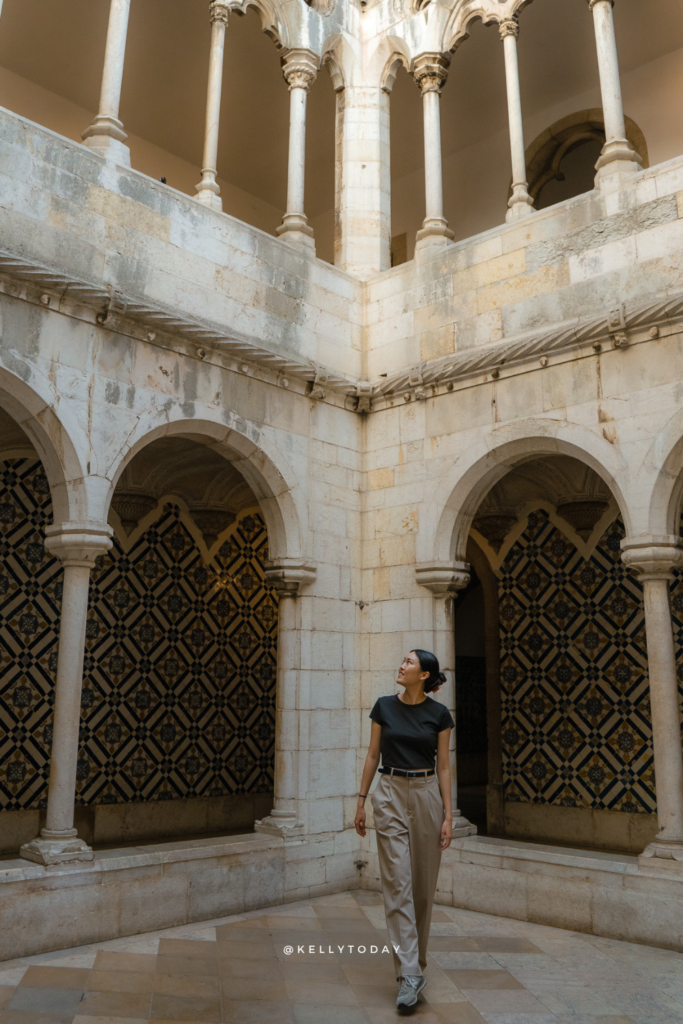
National Tile Museum (Museu Nacional do Azulejo) offers a deeper look into one of Portugal’s most recognisable art forms: the azulejo. These decorative glazed tiles appear all across Lisbon, from churches and train stations to house facades, and this museum traces their evolution from the 15th century through to contemporary designs.
What can you see at the Museum?
The museum itself is housed inside the former Madre de Deus Convent, founded in 1509 by Queen Leonor, which makes the setting just as impressive as the collection. As you move through the galleries, you’ll find everything from intricate geometric patterns to large storytelling panels that showcase how tilework became such a defining part of Portuguese identity.
One of the standout spaces is the richly decorated church attached to the convent, filled with gilded woodwork, paintings, and elaborate blue-and-white tile panels that contrast beautifully against the gold interiors. The museum also features a famous panoramic tile artwork depicting Lisbon before the 1755 earthquake.
Tips for visiting:
- Entry is free with the Lisboa Card
- Allow around 1–2 hours to properly explore the museum
- Don’t skip the church section — it’s one of the highlights of the visit
- The museum café is worth stopping at, with traditional Portuguese dishes and historic tiled interiors
- The gift shop is a good place to pick up locally inspired ceramics and tile souvenirs
If you’ve been admiring Lisbon’s tiled buildings while walking through the city, this museum gives much more context to the history and craftsmanship behind them.

Take a Tuk Tuk Tour Around Lisbon
Lisbon might be one of Europe’s most walkable cities, but its steep hills and endless staircases can quickly become tiring, especially after a full day of sightseeing. That’s why tuk tuk tours have become one of the most popular ways to explore the city, offering a more relaxed way to move between neighbourhoods, viewpoints, and major landmarks without the uphill climbs.
These small electric vehicles are ideal for navigating Lisbon’s narrow streets and winding alleyways, particularly in older areas like Alfama where larger buses can’t easily reach. Along the way, you’ll usually stop at key landmarks, scenic miradouros, and hidden corners of the city while learning more about Lisbon’s history from a local guide.
Most tours cover highlights such as:
- Belém Tower
- Jerónimos Monastery
- Castelo de São Jorge
- Lisbon Cathedral
- Praça do Comércio
- Lisbon’s famous viewpoints and historic districts
Popular tuk tuk tours to consider:
- Private Lisbon & Belém tuk tuk tour – A longer tour that combines the historic centre with Belém, ideal if you want to cover more ground comfortably.
- Old Town tuk tuk tour – Focuses on Lisbon’s older neighbourhoods like Alfama, with scenic viewpoints and narrow backstreets.
- Lisbon highlights & viewpoints tour – A good introduction to the city if it’s your first time visiting and you want an overview of the main sights.
Tuk tuk tours are especially helpful if you’re short on time, travelling in warmer months, or simply want a break from walking while still seeing a lot of the city.
Frequently Asked Questions about Visiting Lisbon
How many days do you need in Lisbon?
Three to four days is ideal for most first-time visitors. This gives enough time to explore the city slowly while also allowing for day trips to places like Sintra or Cascais.
Is Lisbon expensive?
Lisbon is generally more affordable than many major Western European cities, particularly when it comes to transport and food. Accommodation prices, however, have increased in recent years due to tourism.
Is Lisbon walkable?
Lisbon is very walkable, but the hills can be surprisingly steep. Most visitors end up combining walking with public transport throughout the day.
What’s the best area to stay in Lisbon?
For first-time visitors, Baixa, Chiado, and Alfama are the best areas to stay thanks to their central location and easy access to attractions.
Is Lisbon safe for tourists?
Lisbon is considered a safe city for travellers, though pickpocketing can happen in crowded tourist areas and on public transport, particularly on Tram 28.
📝 Other Resources You Might Find Helpful 📝
- Downloadable 7-Day Switzerland Travel Itinerary & Map
- Save time and planning with a Downloadable Notion Travel Template
- 27 travel essentials I wish I knew about earlier in my twenties
- How to Take Photos of Yourself as a Solo Traveller
- 20 Tips for Travelling on a Budget
- Camera gear I use on regular rotation on my travels
Travel Planning Resources
Power Adaptors : I always recommend buying a universal adaptor so you can use it in any country (great for future travels), and it offers extra ports for USB cables to charge your devices.
Accommodation 🛌: I book all my accommodation in Europe through Booking.com. They have a wide selection of accommodations worldwide, with flexible booking options and great deals. If you join their Genius Loyalty program, you can also get discounts on selected stays.
Attractions & Tours 🌟 Klook and GetYourGuide are my preferred platforms for local tours and activities in Korea. They make it easy to compare tours, book experiences and the best deals. You can also download their mobile app, where you can easily access your bookings on the go.
Easy Car Rental 🚗 Get hassle-free car rentals on DiscoverCars with a wide selection, competitive prices, and great customer service. Often it’s cheaper than booking direct, and you can compare a large range of suppliers to check if you’re getting the best price.
Stay Connected 📶 wherever you go by easily and affordably purchasing an eSim for all your travels. Thanks to Airalo, you’ll get instant access to data, and you don’t need to physically swap a plastic SIM card every time you’re travelling to a new country.
Travel Insurance 🛡️ I use World Nomads for overseas travel insurance. Travel with peace of mind knowing you’ll be covered for unexpected events and plan a worry-free journey.
Camera Gear 📸: If you’re curious about the camera gear I’ve used for my photos, find out what’s in my camera bag here.
Found this helpful? 👇🏼
Found this free guide helpful? Support my work so I can produce more free content for you.
📌 Like this post? Pin ‘10 Best Things to See in Lisbon‘ for later.






Leave a Reply
You must be logged in to post a comment.