Thinking of visiting Karijini National Park on your Western Australia trip? If you’ve started researching accommodation in Karijini National Park, you’ll quickly realise that options are limited — but that’s part of what makes this destination feel so untouched and special.
In this guide, I’m sharing my honest experience staying at Karijini Eco Retreat — one of the most unique stays in the state — along with everything you need to know about accommodation in Karijini, camping in Karijini, and how to plan your trip.
I spent three days here in April 2026 on a work trip, and it completely exceeded my expectations. Between hiking through ancient gorges, watching the sky turn deep shades of orange at sunset, and falling asleep under a blanket of stars, Karijini is the kind of place that quietly reshapes your sense of time. If you’re planning a visit, here’s exactly what to expect.
Disclaimer: This post may contain affiliate links, which means I get a small commission if you make a purchase (at no extra cost to you). It’s one of the ways I can keep producing free resources and guides for my readers. Thank you for your support! Refer to the Disclosure Policy for more details.
Short on time?
My top recommendations for your Karjini National Park travel itinerary include:
🗺️ Tours: Klook, GetYourGuide, and Viator.
🛌 Accommodation: Find the best deals on stays in Western Australia with Booking.com.
🚗 Getting Around Karijini National Park: Get hassle-free car rentals on DiscoverCars with a wide selection, competitive prices, and great customer service.
🏥 Travel Insurance: World Nomads
📶 Staying Connected: Get instant access to data with Airalo eSIM.
How to Get to Karijini National Park
Getting to Karijini takes a little more effort than your average weekend trip, but that’s part of what makes it feel so special. Tucked away in the rugged Pilbara region, about 1,400 kilometres north of Perth, this is the kind of place you plan for — and trust me, it’s worth every kilometre. If you’re travelling from Perth, you’ve got a few different options depending on your time, budget, and sense of adventure.
From Perth
A road trip is one of the most popular ways to get to Karijini. The inland route via Great Northern Highway takes roughly 15 hours of driving, passing through classic outback towns like Mount Magnet, Meekatharra, Newman and Tom Price. Many travellers turn this into a longer itinerary, pairing Karijini with a Coral Coast road trip for the ultimate Western Australia adventure.
From Exmouth
If you’re already exploring the coast around Exmouth, you can reach Karijini in around 6–7 hours. The drive follows the North West Coastal Highway before cutting inland via Nanutarra-Munjina Road.
Tom Price
Tom Price is the nearest town to Karijini, located about 45 minutes from the park entrance. It’s your best bet for fuel, last-minute supplies, and basic services.
By Air
If you’re short on time, flying is the quickest option. Qantas operates regular flights from Perth to Paraburdoo Airport (around 2 hours). From there, it’s about a 1.5-hour drive to Karijini, with car hire available at the airport.
No matter how you choose to get there, the journey to Karijini is all part of the experience — wide open roads, red earth, and that feeling of heading somewhere truly remote.
Tip: Check for the best flight deals and availability using Agoda.
Best Time to Visit Karijini National Park
The best time to visit is between April and September, when temperatures are milder. If you’re planning camping in Karijini, avoiding peak summer is especially important.
- April–May: Warm but manageable – Ideal conditions (this is when I visited)
- June–August: Cooler mornings and evenings
- October–March: Very hot, with temperatures often exceeding 40°C
Where to Stay in Karijini National Park
When it comes to accommodation in Karijini National Park, your options range from back-to-basics camping to more comfortable, eco-conscious stays — depending on how you like to experience the outback.
Karijini Eco Retreat
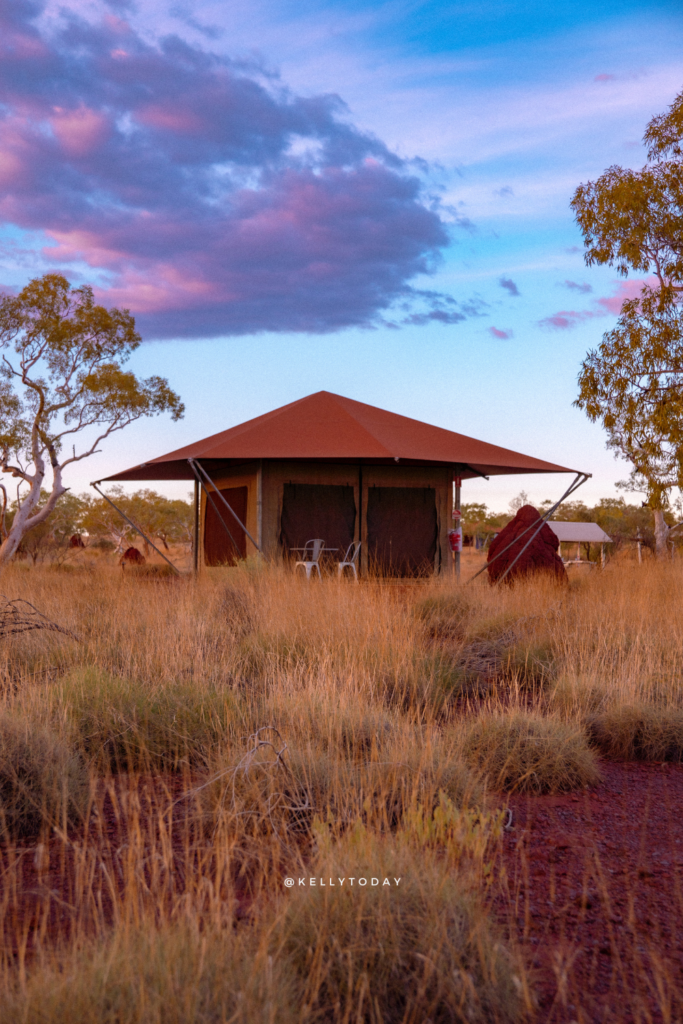
If you want to be right in the heart of the action, this is easily the most convenient (and memorable) place to stay. Tucked in the park itself, Karijini Eco Retreat offers a mix of stays — from unpowered campsites to eco tents and more premium safari-style tents with private ensuites.
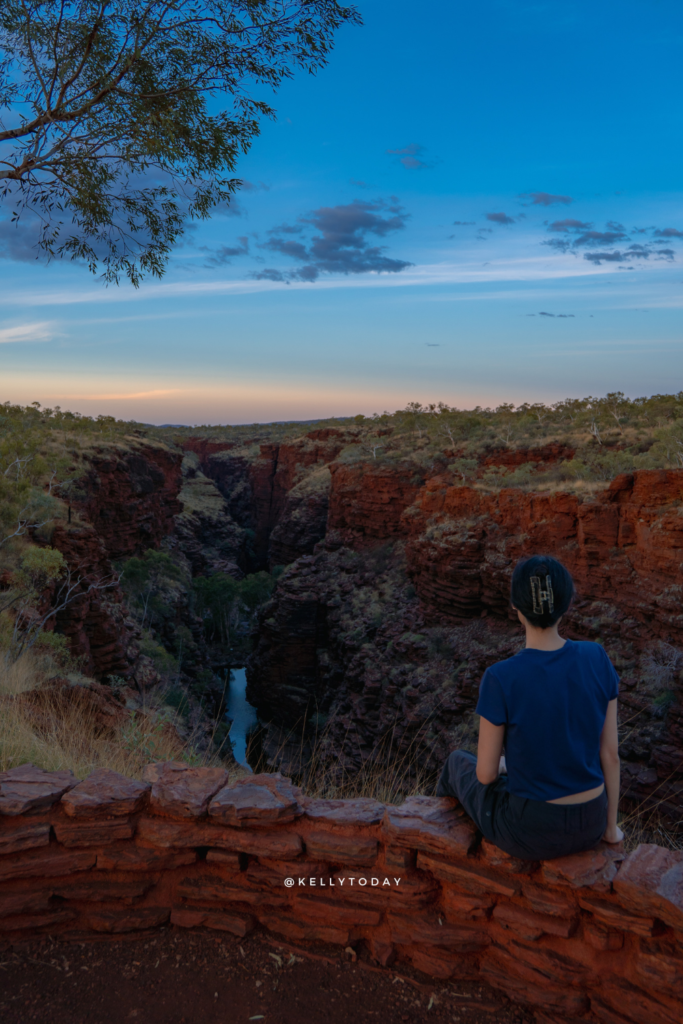
It strikes that rare balance between comfort and immersion. You’ll still fall asleep to the sounds of the bush and wake up to soft Pilbara light, but with thoughtful touches like proper beds, an on-site restaurant and bar, and hot showers waiting after a long day of exploring the gorges. For a trip like this, where distances between sights can be long, staying here means you’re never too far from sunrise hikes or sunset lookouts.
Camping at Dales Campground
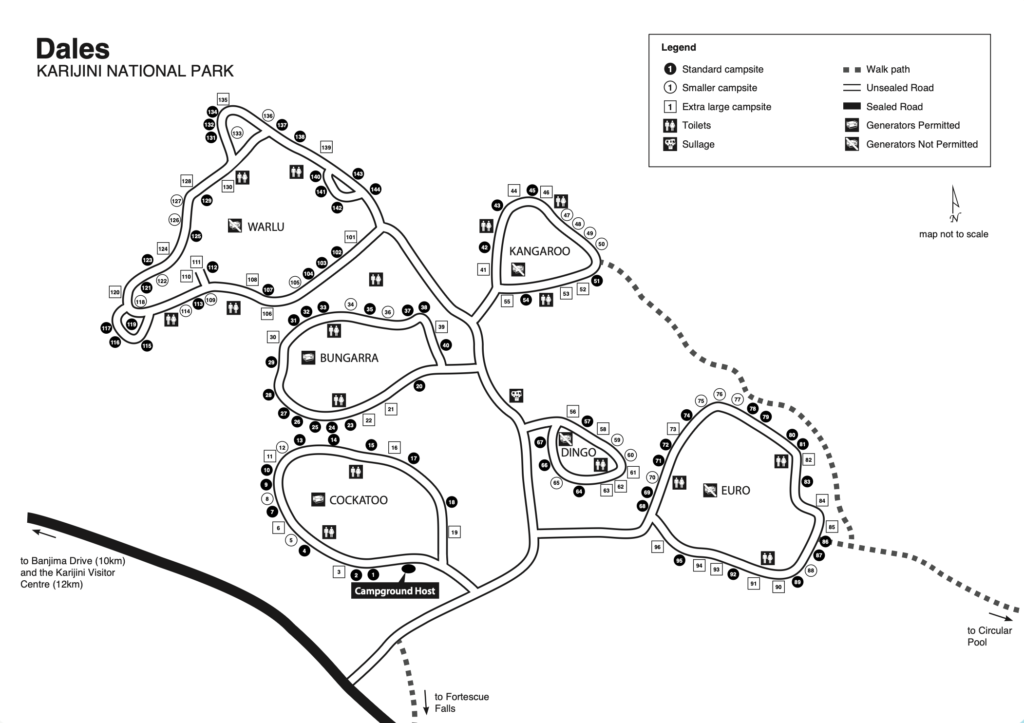
For a more traditional camping experience, Dales Campground is a popular choice within the park. Managed by the Department of Biodiversity, Conservation and Attractions (DBCA), it’s a spacious bush campground with basic facilities like picnic tables, gas barbecues, and toilets. Sites are unpowered, though there are designated areas for generators. Showers and drinking water are available nearby at the Karijini Visitor Centre. It’s simple, but the location — close to some of the park’s most iconic gorges — is hard to beat.
Just keep in mind that camping fees apply at Dales Campground, and bookings are essential — especially during peak travel periods. Fees are $15 per adult and $5 per child, with concession rates available for adults at $10.
You can book up to six months in advance through the Park Stay website, with one arrival date allowed per booking.
Staying at Tom Price
If you’d prefer a few more amenities or are travelling with a caravan, basing yourself in Tom Price is another option. Just a 45-minute drive from the park, it’s the closest town and has everything from fuel to supermarkets.
Tom Price Tourist Park offers cabins as well as powered and unpowered sites, plus facilities like a camp kitchen, laundry, and even a pool — a welcome treat after a day out. Staying here means a bit more driving each day, but it can suit those who prefer a more traditional holiday park setup.
Why Stay at Karijini Eco Retreat?
When it comes to accommodation in Karijini National Park, options are fairly limited — which is part of what keeps this place so special.
Set within the park itself, the retreat is designed as an eco-tourism experience that blends into the surrounding landscape rather than competing with it. Karijini Eco Retreat stands out because it blends comfort with the raw beauty of the outback. It’s the only glamping-style accommodation within the park itself, offering a more elevated alternative to traditional camping in Karijini.
Instead of pitching a tent and roughing it, you get a comfortable bed, your own space, and access to on-site facilities — all while being surrounded by red earth, native bushland, and expansive skies.
What stood out to me most wasn’t just the accommodation — it was the feeling of being fully immersed in the environment, without sacrificing the small comforts that make travel more enjoyable.
There’s something about returning from a long hike, dusty and sun-tired, and knowing you have a proper bed, a meal waiting, and a quiet space to unwind.
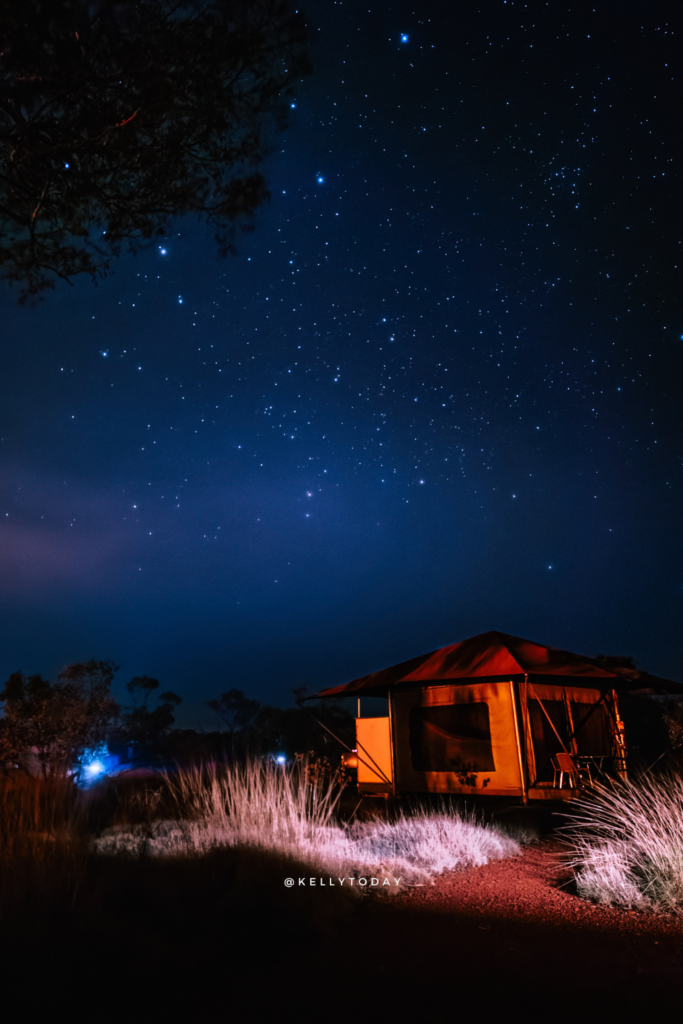
Deluxe Eco-Tent at Karijini Eco Retreat
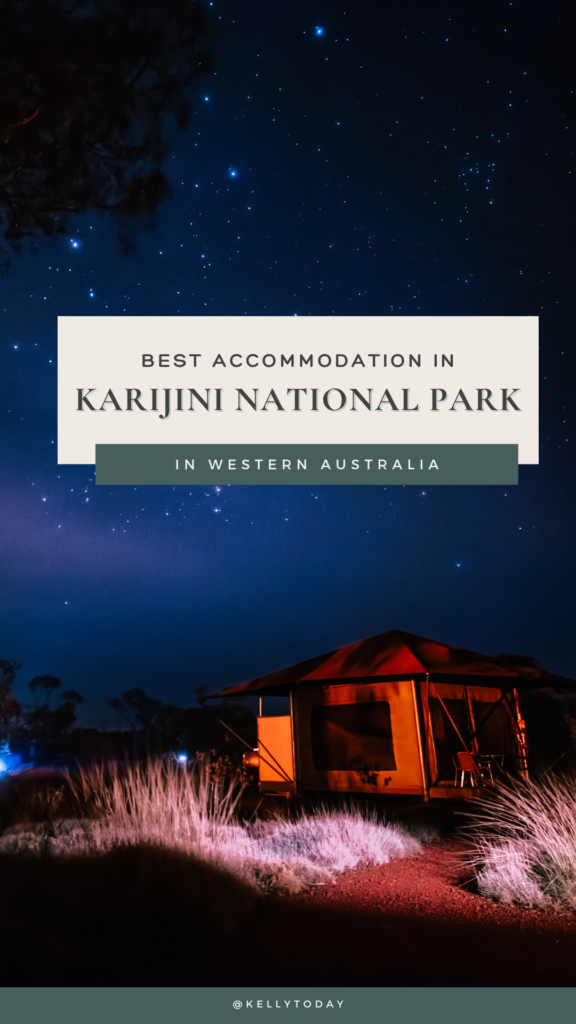
I stayed in one of the Deluxe Eco Tents, and it struck the perfect balance between comfort and immersion in nature. Each tent includes:
- A comfortable king-size bed (or you can choose 2 single beds)
- Ensuite bathroom with a basin, solar hot water shower and flushing toilet
- Front deck area with a table and chairs overlooking the bushland
- Eco-friendly design that minimises environmental impact
- Solar-powered lights that can charge low-wattage appliances, e.g. phone, camera battery
Waking up here feels surreal — soft morning light filtering through the tent, birds in the distance, and that quiet stillness you only get in remote parts of Western Australia.
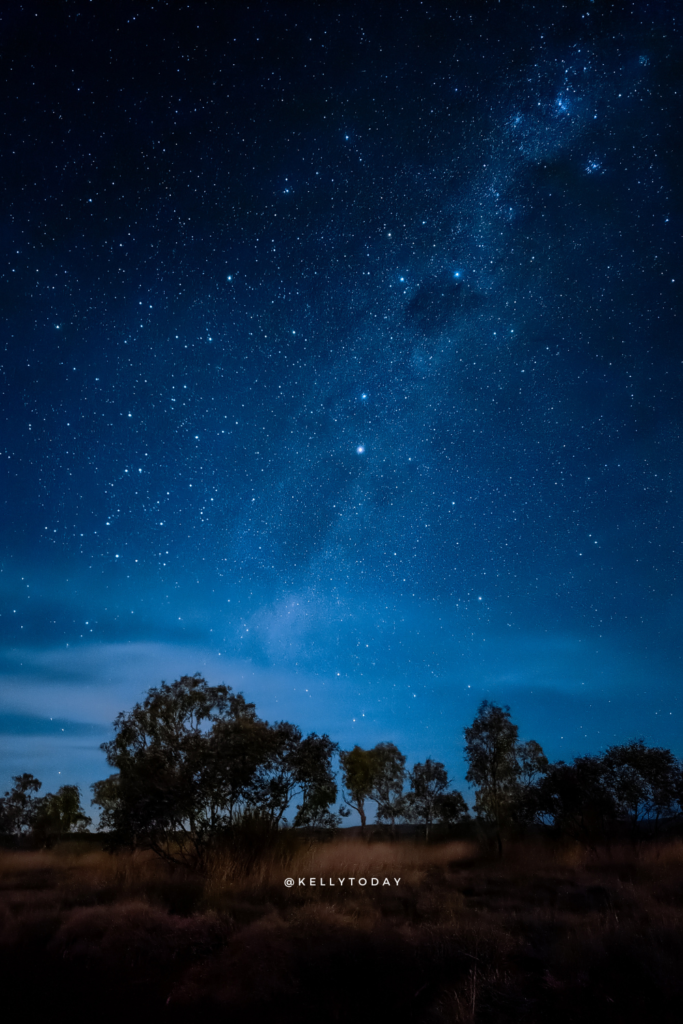
At night, the lack of light pollution makes it ideal for stargazing. It’s easily one of the most peaceful stays I’ve experienced. The design is intentionally low-impact, but it doesn’t feel like you’re “roughing it.” Mornings were slow and quiet — soft light filtering through the canvas, the distant sound of birds, and that crisp outback air that makes you want to step outside immediately.
At night, it’s a completely different atmosphere. With minimal light pollution, the sky opens up in a way that’s hard to describe until you see it yourself. Stargazing here doesn’t feel like an activity — it just becomes part of your evening.
Find the latest availability for Karijini Eco Retreat here.
Facilities at Karijini Eco Retreat: What to Expect During Your Stay
One of the biggest perks of staying at Karijini Eco Retreat — especially if you’re deciding between the retreat and traditional camping in the national park — is the added comfort and convenience after a long day exploring the gorges.
Outback Restaurant
The on-site Outback Restaurant is an alfresco-style dining space set against the rugged outback landscape, serving breakfast, lunch, and dinner throughout the year.
For lunch, you can either dine at the restaurant or organise a packed picnic lunch to take with you on your adventures around the park. Picnic lunches need to be pre-ordered before 6 pm the day prior and can be arranged at Reception during check-in.
Restaurant operating hours vary seasonally, so it’s worth checking ahead of time before your stay. After spending the day hiking through Karijini’s gorges and swimming holes, coming back to a freshly prepared meal without needing to cook is one of those small luxuries you’ll quickly appreciate.
Campsites
In addition to the eco tents and cabins, the retreat also offers unpowered campsites suitable for caravans, campervans, and tents. Guests staying at the campground have access to a range of shared facilities, including:
- Undercover bush BBQ areas
- Shared bathroom facilities with flushing toilets and solar hot water showers
- A kiosk selling drinks, confectionery, takeaway tea and coffee, and ice
- Access to 64 spacious unpowered campsites
It’s a great option if you still want the experience of camping in Karijini, while having access to more comfortable amenities nearby.
Camping in Karijini National Park
If you’re looking for budget-friendly accommodation in Karijini, camping is a popular option. There are several campgrounds within the park, including:
- Dales Campground
- Karijini Eco Retreat campground
Camping in Karijini National Park is more rugged, with basic facilities — but it’s a great way to experience the landscape more intimately. That said, if you want a bit more comfort (especially after long hikes), the Eco Retreat is well worth the upgrade.
Tips for Visiting Karijini National Park
Entry Fees for Karijini National Park
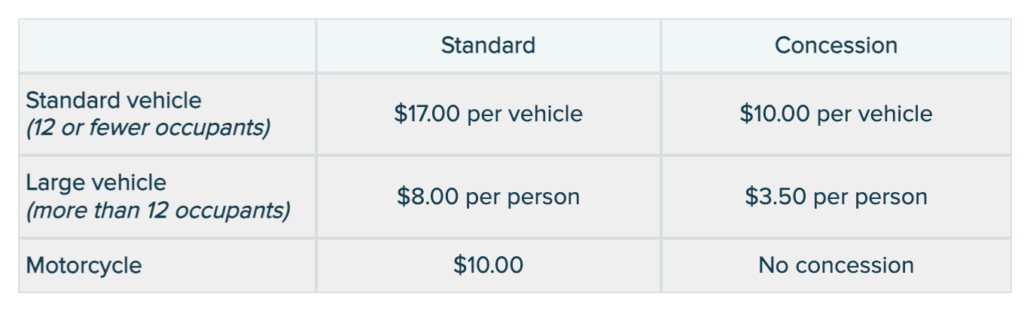
Entry fees apply for Karijini National Park and are broken down by the Parks and Wildlife Service. You can purchase a park pass for part entry fees online in advance from the Department of Biodiversity, Conservation and Attractions (DBCA). The pass covers one vehicle with up to 12 seated people. Once you confirm your order for your pass, you’ll be emailed it to your submitted email address or you can log in to your account page under the DBCA to download it under your ‘order.’
Tip! If you hold a concession card, you can qualify for concession discounts for the pass under the DBCA. Just submit your Australian Concession Card Number and concession type when you’re ordering your pass online.
Things to Do in Karijini National Park
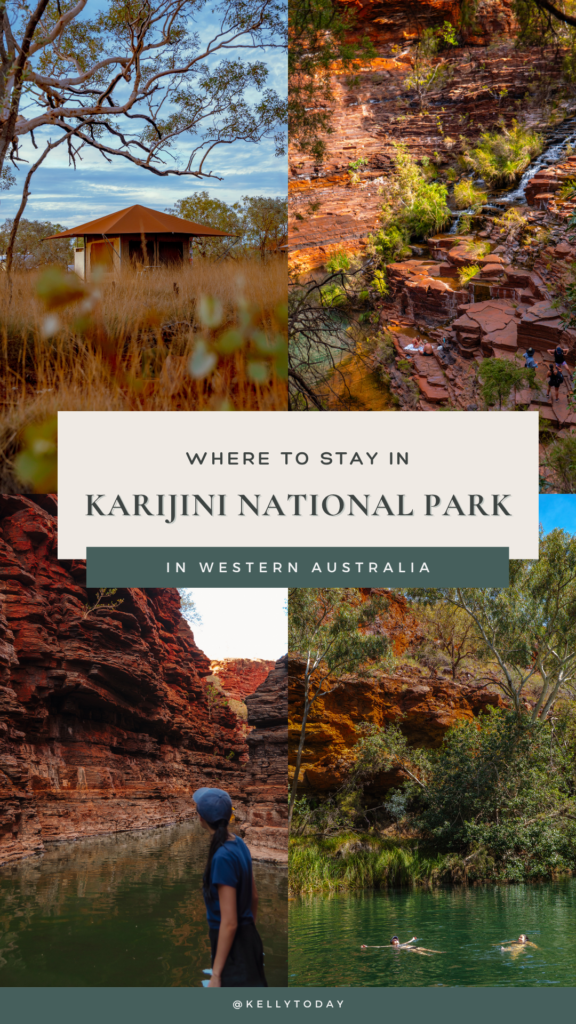
Staying inside Karijini National Park gives you easy access to some of the Pilbara’s most incredible landscapes, with many of the park’s best-known gorges and swimming spots only a short drive away.
Hancock Gorge
Known for its adventurous “Spider Walk”, Hancock Gorge is one of the park’s most unforgettable experiences. The trail takes you through narrow rock passages, along ledges, and down ladders into the heart of the gorge, eventually leading towards the striking blue-green waters of Kermits Pool. The hike can be challenging in sections, but the dramatic scenery makes it well worth the effort.
Weano Gorge
Located on the western side of the park, Weano Gorge is famous for its towering red cliffs, winding pathways, and crystal-clear pools. There are several different sections to explore, including the route towards Handrail Pool and the upper gorge trails accessed from Oxer Lookout. It’s one of the more adventurous areas in Karijini and a favourite for hikers wanting to experience the park’s rugged terrain up close.
Fern Pool
Fern Pool feels almost hidden away within the gorge system — a peaceful swimming spot surrounded by lush greenery and shaded rock walls. Fed by a natural spring and framed by ferns and a small cascading waterfall, it’s one of the most serene places in the park and perfect for a refreshing swim after a hike.
Dales Gorge
Dales Gorge is one of the most accessible and scenic areas within the park, home to walking trails, waterfalls, swimming holes, and lookout points. The gorge is known for its deep pools, layered rock formations, and pockets of lush vegetation contrasting against the red Pilbara landscape.
Fortescue Falls
One of Karijini’s most popular swimming spots, Fortescue Falls is also the park’s only permanent waterfall. Reached via a steep staircase descending into Dales Gorge, the falls are especially refreshing after a warm day exploring the trails nearby.
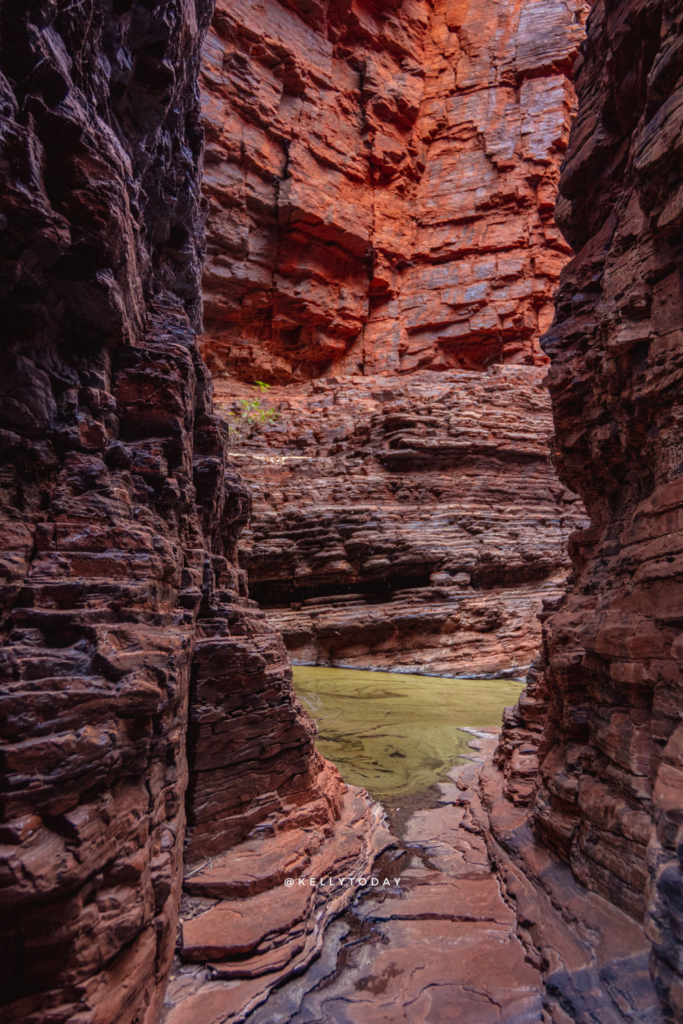
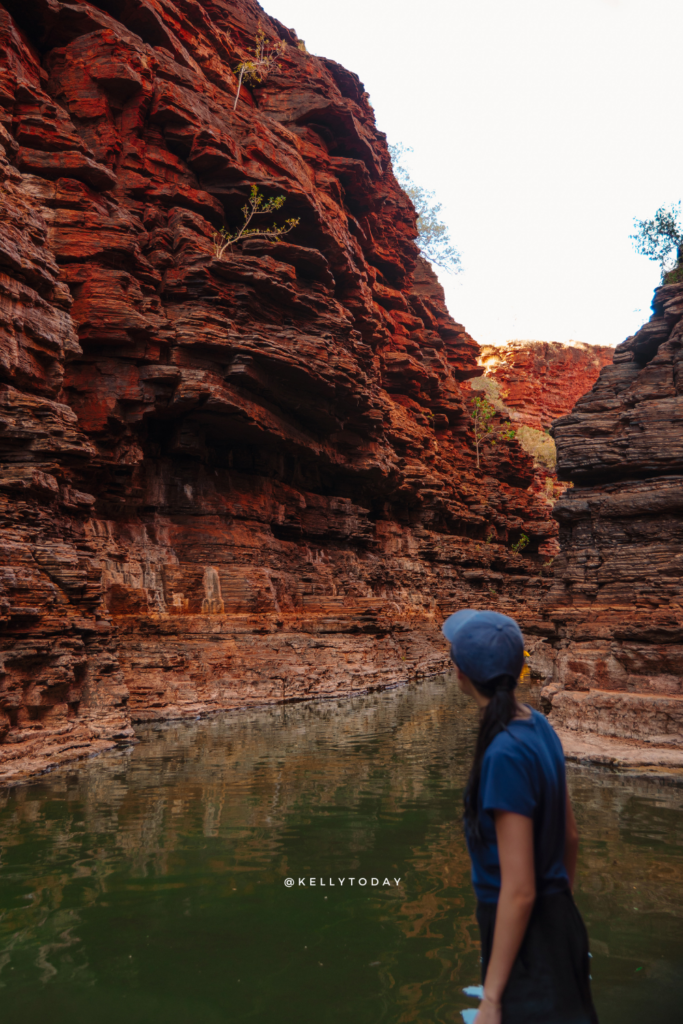
The landscapes throughout Karijini feel incredibly varied — some gorges are narrow and shadowy, while others open into wide pools and towering amphitheatres of layered rock formed over billions of years.
A typical day in the park often settles into a slower rhythm:
- Early morning hikes before the temperatures rise
- Relaxing swims or shorter walks during the middle of the day
- Sunset visits to lookout platforms and scenic viewpoints
- Dinner back at the retreat after a full day exploring
That balance of adventure and quiet moments is part of what makes a trip to Karijini feel so memorable.
💡 Invest wisely in your gear — discover my go-to camera equipment that’s worth the money and has made the biggest difference in my photography.
Visit the Karijini Visitor Centre
Before setting off to explore the gorges, it’s well worth making a stop at the Karijini Visitor Centre. Located near Dales Gorge, the centre is a helpful first stop for current park information, safety updates, and learning more about the region’s cultural and natural history.
Inside, you’ll find:
- Updated trail and gorge conditions
- Safety information and hiking advice
- Maps and information about the park
- Exhibits exploring the geology, wildlife, plants, and history of the area
- Cultural displays sharing the stories and traditions of the local Aboriginal people
Frequently Asked Questions about Karijini National Park
How many days do you need in Karijini National Park?
At least 2 to 3 days, but more than 4 days is ideal to explore Karijini National Park without rushing to see all the sights. On my last trip to Karijini National Park, I stayed two nights at Karijini Eco Retreat and had about 2 days of exploring the national Park.
Is Karijini Eco Retreat worth it?
Yes – especially if you want comfort and convenience without the experience of being in the natural bushland of Karijini National Park. One of the best features about staying at Karijini Eco Retreat is that you’ll have direct access to trails, hikes and gorges in the National Park.
Do you need a 4WD for exploring Karijini National Park?
No, you don’t need a 4WD to explore Karijini National Park. In 2025, major road upgrades within the park have made many of the main attractions more accessible for 2WD vehicles, caravans, and campervans.
Roadworks completed in 2025 included the sealing of approximately 41km of key roads throughout the park, improving access to popular areas including Knox Gorge, Joffre Gorge, Hancock Gorge, Weano Gorge, and Karijini Eco Retreat.
While most visitors can comfortably explore the park in a standard 2WD vehicle during dry conditions, it’s still important to check current road conditions before travelling, particularly after heavy rain or during the wet season.
Is Karijini suitable for beginner hikers?
Karijini has a mix of easy walks and more challenging hikes. Some locations, like Fern Pool and Fortescue Falls, are relatively accessible, while places like Hancock Gorge and Weano Gorge involve steep descents, uneven terrain, and sections that require scrambling.
Can you swim in Karijini National Park?
Yes — swimming is one of the highlights of visiting the park. Popular swimming spots include Fern Pool, Fortescue Falls, and several gorge pools throughout the park. Water temperatures can be surprisingly cold, especially in the cooler months.
Where should you stay in Karijini?
Accommodation options include campgrounds, caravanning areas, and eco-style glamping accommodation at Karijini Eco Retreat. Staying within the park allows easier access to sunrise hikes, swimming spots, and sunset lookouts.
Are there fuel stations inside Karijini?
There are no fuel stations located inside Karijini National Park, including at Karijini Eco Retreat, so it’s important to plan ahead and refuel before entering the park.
Most visitors fill up in nearby towns such as Tom Price or Newman, depending on their travel route. Fuel stations are generally well spaced along the main highways leading towards Karijini, but it’s still a good idea to top up regularly, especially when driving long distances through the Pilbara.
With careful planning, most travellers won’t need to carry additional fuel. Before your trip, it helps to map out which gorges and attractions you want to visit so you can plan efficient driving routes and avoid unnecessary backtracking around the park.
Is there phone reception in Karijini?
Phone reception in Karijini National Park can be limited and inconsistent due to the park’s remote location and large size. Both Telstra and Optus services are available around Karijini Eco Retreat, while Optus coverage is also available near the Karijini Visitor Centre and Dales Campground area. Outside of these locations, reception can become patchy, and most gorges have little to no signal at all.
What should you pack for Karijini?
Packing properly can make a huge difference when exploring Karijini National Park, especially if you plan on hiking through the gorges and swimming in the pools. Many trails involve uneven terrain, water crossings, ladders, and slippery rock surfaces, so practical gear is essential.
Some of the most useful things to bring include:
- Plenty of drinking water and electrolytes (bladder pack recommended for hiking)
- Good quality trail shoes or water shoes with grip
- Lightweight quick-dry clothing and swimwear
- A hat, sunglasses, and sunscreen
- A small dry bag or waterproof pouch for phones and valuables
- A lightweight daypack that can handle getting wet
- Snacks for longer hikes and driving days
- A microfibre towel and a change of clothes
- A portable charger or power bank
- A basic first aid kit with blister patches and personal medication
- Offline maps or downloaded trail information due to limited reception
When it comes to footwear, grip is one of the most important things to consider. Smooth-soled shoes, thongs, or heavy hiking boots can make gorge walks more difficult, particularly in areas like Hancock Gorge and Handrail Pool, where rocks can become slippery near the water.
Quick-dry clothing is also worth prioritising, as many hikes involve swimming or wading through pools. Most visitors end up in the water at some point — even if they didn’t originally plan to.
Is Karijini worth visiting?
Absolutely. Karijini National Park is considered one of Western Australia’s most spectacular national parks, known for its ancient gorges, waterfalls, swimming holes, and dramatic red-rock landscapes. It’s the kind of destination that feels both adventurous and incredibly grounding at the same time.
Final Thoughts: Is Karijini Eco Retreat the Best Accommodation in Karijini?
If you’re searching for the best accommodation in Karijini National Park, Karijini Eco Retreat offers a unique balance of comfort, sustainability, and location. It’s one of those places that stays with you long after you leave — not just because of the landscapes, but because of how it makes you slow down and reconnect with nature.
Travel Planning Resources
Power Adaptors : I always recommend buying a universal adaptor so you can use it in any country (great for future travels), and it offers extra ports for USB cables to charge your devices.
Accommodation 🛌: I book all my accommodation in Australia through Booking.com. They have a wide selection of accommodations worldwide, with flexible booking options and great deals. If you join their Genius Loyalty program, you can also get discounts on selected stays.
Attractions & Tours 🌟 Klook and GetYourGuide are my preferred platforms for local tours and activities in Australia. They make it easy to compare tours, book experiences and the best deals. You can also download their mobile app, where you can easily access your bookings on the go.
Easy Car Rental 🚗 Get hassle-free car rentals on DiscoverCars with a wide selection, competitive prices, and great customer service. Often it’s cheaper than booking direct, and you can compare a large range of suppliers to check if you’re getting the best price.
Stay Connected 📶 wherever you go by easily and affordably purchasing an eSim for all your travels. Thanks to Airalo, you’ll get instant access to data, and you don’t need to physically swap a plastic SIM card every time you’re travelling to a new country.
Travel Insurance 🛡️ I use World Nomads for overseas travel insurance. Travel with peace of mind knowing you’ll be covered for unexpected events and plan a worry-free journey.
Camera Gear 📸: If you’re curious about the camera gear I’ve used for my photos, find out what’s in my camera bag here.
Other Resources You Might Find Helpful
- Best travel photography gear worth your money
- 20 ways to afford travel on a budget
- Ultimate Female Travel Essentials List for International Travel
- Save time planning your next trip with a Notion Travel template (download here)
- How to edit your photos on Lightroom like a Pro
Found this helpful? 👇🏼
Support my work by buying me a coffee so I can produce more free content for you.
📌Click on this pin to save ‘Accommodation in Karijini National Park’ for later.


Leave a Reply
You must be logged in to post a comment.